How High Rise Parking Works
We notice that comparing luxury apartment leases in the US often feels like assembling a puzzle. The base rent rarely tells the full financial story.
Add-on costs usually create the most common surprise on a final contract. Our team built the high rises with parking search to solve this exact problem.
This guide explains the types of parking, how fees show up, and what to know about apartment EV charging.

Parking Types
High-rise parking falls into five main categories, with prices ranging from zero to over $200 for premium spots. Each building sets its own rules when balancing apartment reserved parking vs unreserved spaces based on neighborhood demand. We confirm current rates for your shortlist so you can budget accurately.
In 2026, typical high rise parking fees Houston renters pay can push an advertised $2,400 unit to a $2,635 apartment once standard monthly costs hit. Reserved spots often fetch $100 to $200 extra per month.
Our agents always review the available spots during property tours. Valet is a premium service usually running north of $200 monthly.
| Type | What it means | Typical 2026 US cost |
|---|---|---|
| Unreserved | Park in any open space in the residential garage | Lowest, sometimes included |
| Reserved | An assigned space, often closer to the elevators | $100 to $200 monthly fee |
| Tandem | Two cars in one deep space, one behind the other | Usually less than two separate spaces |
| Valet | Staff park and retrieve your car | Premium fee averaging $200+ |
| Covered vs. uncovered | Almost all high rise parking is in a structured or subterranean garage | Included in structure |
How Fees Show Up on Your Lease
Parking fees appear on your contract as included rent, an add-on line item, or a completely separate agreement. Most Texas properties use standard TAA addendums that legally bind your parking terms to your housing contract. We always review these addendums for hidden charges.
You might spot upfront costs like a $50 to $100 non-refundable fee for your electronic access fob. Management companies rarely waive these replacement fees. Our goal is to highlight every fee before you apply.
Parking appears in one of three ways:
- Included: one space is part of rent. Additional spaces cost extra.
- Add-on: every space is a separate monthly charge.
- Parking agreement: a separate contract for the space, sometimes with its own deposit or fob fee.
Compare all-in rent
When one tower includes a space and another charges for it, the cheaper-looking rent is not always cheaper. Add parking before you compare.
Garage Types
High rises use either structured above-ground garages or subterranean underground facilities. Your choice directly impacts your vehicle’s safety during severe US weather events.
We saw during the 2024 Hurricane Beryl storms how subterranean garages in low-lying areas remain vulnerable to water intrusion. Above-ground podiums clear this hazard completely.
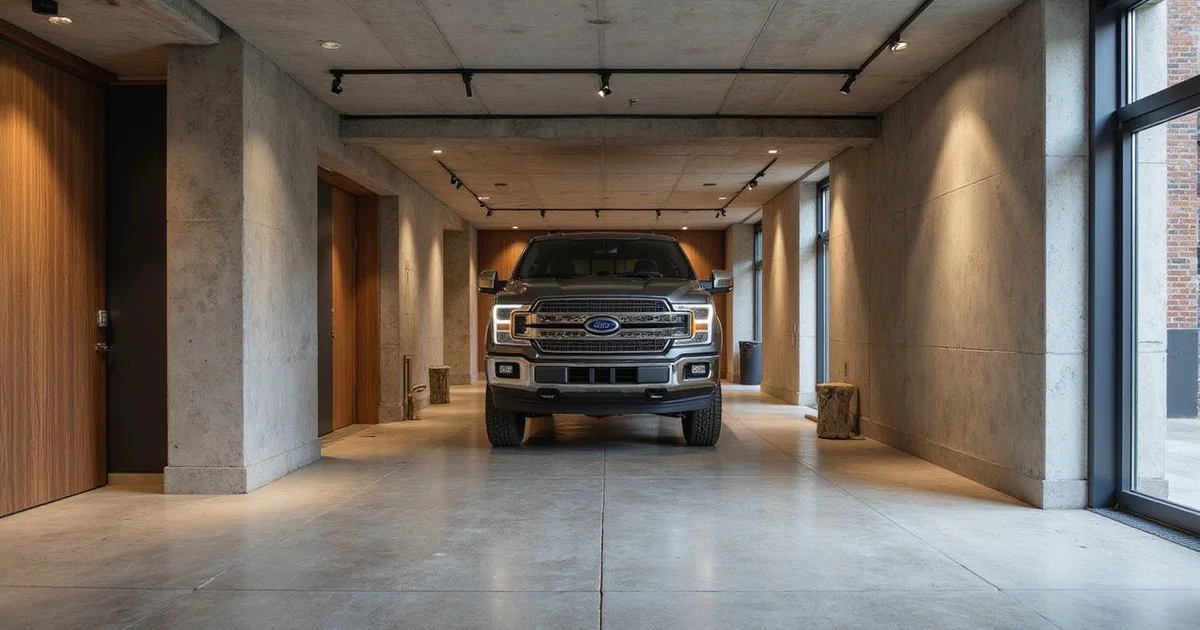
Check garage clearance if you drive a lifted truck or an SUV with a roof box. Our data shows most high-rise garages max out at a clearance height between 7’0” and 8’2”.
- Structured garage: above ground, often the podium of the tower. Easier to exit, and above street-level flooding.
- Subterranean garage: below ground. Out of sight, but can flood in major storms. Read our hurricane guide.

EV Charging
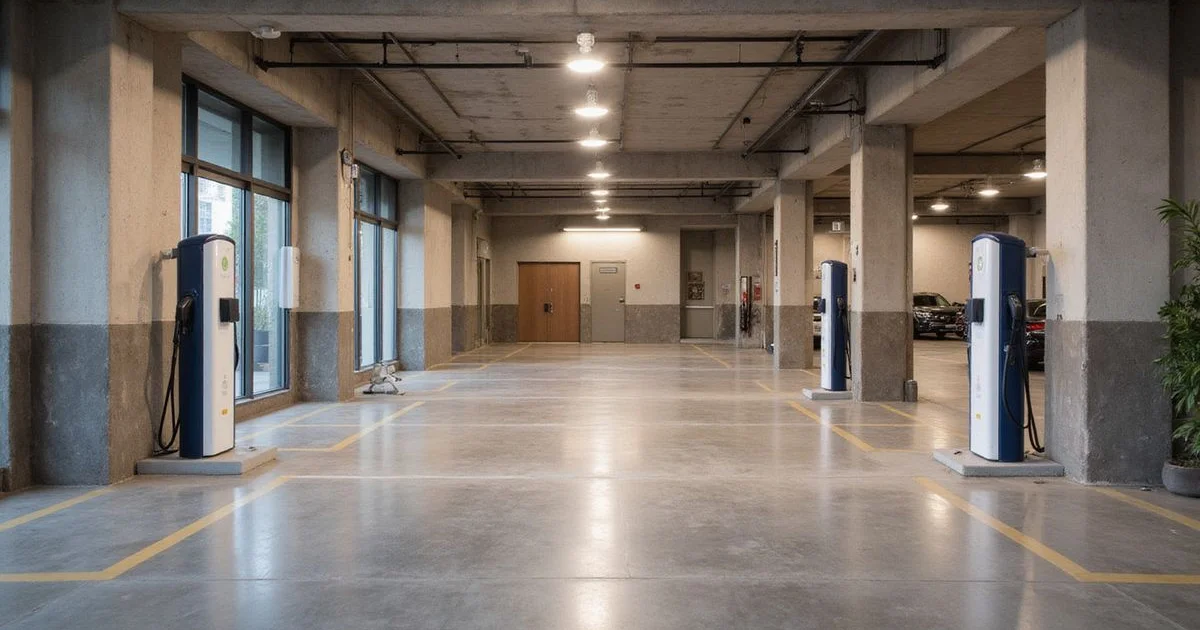
Most new apartment buildings now feature Level 2 EV charging stations, usually billing users by the kilowatt-hour. Popular networks like ChargePoint or Blink manage the hardware and process your payments directly through their apps.
Our team tracks building charging policies because costs vary wildly. In 2026, average public Level 2 charging in Houston costs around $0.31 per kWh.
Residential garages often negotiate a lower rate closer to $0.15 or $0.20 per kWh for tenants. We help EV drivers calculate these monthly charging costs.
Questions to ask:
- Are chargers shared or assigned?
- Is there a monthly fee, a per-kWh rate or both?
- How many chargers per resident?
- Can I install a charger at a reserved space?
Access and Security
Secure garages restrict entry using mobile credentials, windshield tags, or traditional fobs. These systems connect to your lease and automatically revoke access the day you move out. We see modern buildings rapidly upgrading to cloud-based systems like ButterflyMX.
These platforms use RFID windshield tags that open the gate from up to 20 feet away. Many US properties now link this software directly to your existing EZ Tag for totally hands-free entry.
Our priority is finding communities with reliable security hardware across three main categories:
- Resident access: EZ Tag integration and mobile app credentials.
- Visitor entry: Day passes, QR codes, or designated nearby paid lots.
- Move-out security: Automatic lease-linked credential revocation.
Other Vehicles
Alternative vehicles require specific storage solutions like secured bicycle cages or designated motorcycle zones. A standard parking spot is rarely the best place for a high-end road bike. Our agents always ask about dedicated bike storage if you cycle.
Dedicated bike rooms offer wall-mounted racks. Residents should still use a heavy-duty U-lock for insurance purposes.
We ensure your specific vehicle fits the property rules. Some buildings also have ride-share staging areas at the entrance for quick transit.
Do You Need a Car at All?
You can absolutely live without a car if you rent along a major public transit corridor. Skipping the vehicle saves you from paying a premium for parking, gas, and insurance. We help many relocating professionals map their daily commute using local transit.
The 13-mile METRORail Red Line directly connects Downtown business hubs to the massive Texas Medical Center. Trains run roughly every 6 minutes during rush hour.
Our team recommends test-riding the rail route before selling your car. Read living car-free in Houston.
How to Compare Parking Across Buildings
Comparing parking requires building a side-by-side cost table for your shortlisted towers. A tower that looks more expensive may cost less once parking is included. Our clients use this simple framework to track the true cost of their favorite buildings.
| Item | Tower A ($2,200 Rent) | Tower B ($2,300 Rent) |
|---|---|---|
| Spaces included in rent | 0 | 1 |
| Monthly fee per added space | $150 | $100 |
| Reserved option and cost | $250 | $175 |
| EV charging and cost | $0.25 per kWh | $0.15 per kWh |
| Guest parking rules | $10 per day | Free visitor level |
| Garage type and clearance | Subterranean (7’2”) | Structured (8’0”) |
Then add the parking cost to rent for an all-in comparison. Tower A costs $2,350 total with one car, making the $2,300 Tower B the cheaper final option. We provide these complete math breakdowns for every property we recommend.
Questions to Ask on a Tour
You must ask four specific questions about garage layout and rules before signing a lease. Management rarely advertises the downsides of their parking situation. For second cars, guest passes and oversized vehicles, see our parking scenarios guide.
We always ask these questions on behalf of our clients during property tours. Tight corners can make larger vehicles difficult to maneuver. Standard spaces typically measure about 9 feet wide, while compact spaces drop to 8 feet.
Our agents always measure questionable spaces to prevent future damage. A quick measurement prevents daily headaches and scraped doors. Knowing the facts keeps your car safe.
- Is my space assigned or first-come?
- How far is the garage from my elevator?
- Are there height or length limits for lifted trucks?
- Where does the garage take water in heavy rain, if anywhere?
Get Parking Costs Upfront
We will send towers with parking costs and garage details included. Gathering this data yourself takes hours of phone calls and touring.
Tell your agent how many vehicles you have, and whether one is an EV. Our service simplifies this entire relocation process, especially when comparing apartment reserved parking vs unreserved options.